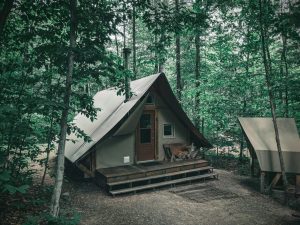
Embracing Small Home Living – The RV Lifestyle and Beyond
Living in a small home, such as an RV, has become an increasingly popular lifestyle choice for many. This trend is driven by a desire for freedom, flexibility, and financial savings. In this blog post, we’ll look into the pros and cons of living in an RV. We will also discuss other cost-friendly alternatives. These are options for those considering a minimalist lifestyle.
Thank you for reading this post, don't forget to subscribe!Pros of Living in an RV
- Mobility and Freedom
- Living in an RV offers unparalleled freedom to explore and move around without the constraints of a fixed location. Residents can wake up to a new view whenever they choose, exploring different cities, countryside settings, or coastal areas.
- Reduced Living Expenses
- Generally, living in an RV can be less expensive than traditional housing. Utility costs are lower. Additionally, there’s no property tax, mortgage, or large maintenance expenses usually linked with home ownership.
- Simplicity and Minimalism
- Small home living encourages a minimalist lifestyle, requiring residents to consider what’s truly essential. This can lead to less clutter and a more organized living space.
- Close Community and Support
- Many RV parks and communities offer a tight-knit community feel. Fellow RVers are often willing to help out each other. They share experiences and give company.
Cons of Living in an RV
- Limited Space
- Space is a premium in an RV. Storage options are minimal, and living quarters can feel cramped, especially for families or those accustomed to larger living spaces.
- Maintenance and Upkeep
- RVs require regular maintenance. Mechanical issues can arise while on the road, which can be costly and inconvenient.
- Weather and Security Concerns
- Living in an RV can expose you to varied weather conditions. At times, it may not offer the same level of security as traditional homes. This is especially true in less populated areas.
- Lack of Stability
- The nomadic nature of RV living might not be suitable for everyone. This is especially true for those who crave routine or have commitments like regular employment in a fixed location.
Cost-Friendly Alternatives to RV Living
- Tiny Houses
- Tiny houses offer many of the benefits of an RV but are typically stationary. They can be customized extensively and are designed to maximize space efficiently.
- Container Homes
- Made from shipping containers, these homes can be an affordable and eco-friendly housing option. They are durable, customizable, and can be located on any purchased or leased land.
- Co-housing
- This is a type of intentional community. It combines private homes with shared spaces. This approach can reduce living costs and foster a sense of community.
- House Sitting
- For those who enjoy travel and flexibility, house sitting can provide free accommodation in exchange for property and pet care.
Conclusion
Small home living, particularly in an RV, offers a unique set of advantages and challenges. It appeals to those seeking a simpler, cost-effective lifestyle that allows for flexibility and adventure. However, it’s not without its drawbacks, such as space limitations and maintenance challenges. Alternatives like tiny houses and container homes provide similar benefits with some added stability. Whichever option you choose, embracing a minimalist lifestyle can lead to significant personal and financial freedom.
Embracing Small Home Living – The RV Lifestyle and Beyond
Living in a small home, such as an RV, has become an increasingly popular lifestyle choice for many. This trend is driven by a desire for freedom, flexibility, and financial savings. In this blog post, we’ll explore the pros and cons of living in an RV. We will also discuss other cost-friendly alternatives for those considering a minimalist lifestyle.
Pros of Living in an RV
- Mobility and Freedom
- Living in an RV offers unparalleled freedom to explore and move around without the need to pack up your belongings. You can live by the beach one week and in the mountains the next.
- Reduced Living Expenses
- Living in an RV can be less expensive than maintaining a traditional home. You benefit from lower utility costs. You also avoid property taxes and reduce maintenance expenses.
- Simplicity and Minimalism
- Small home living encourages a minimalist lifestyle, reducing clutter and the expenses associated with larger living spaces.
- Closeness to Nature
- RVs offer the unique advantage of living closer to nature. You can park in various natural reserves, national parks, and campgrounds.
Cons of Living in an RV
- Limited Space
- The most obvious drawback is the limited space. Storage is minimal, and living quarters can be cramped, especially for larger families.
- Maintenance and Upkeep
- RVs require regular maintenance, and unexpected repairs can be costly and inconvenient, particularly when on the road.
- Weather Dependency
- Harsh weather conditions can greatly affect your living situation, from intense heat in deserts to freezing temperatures in snowy areas.
- Legal and Logistical Issues
- There are various legalities involved, including zoning laws and restrictions on where you can park and live in an RV.
Cost-Friendly Alternatives to RV Living
- Tiny Houses
- Tiny houses offer many of the benefits of an RV but are typically stationary. They can be customized for a more home-like feel and are often built with eco-friendly materials.
- Container Homes
- Repurposed shipping containers can be turned into innovative and cost-effective homes, offering a balance between mobility and stability.
- Co-housing
- This involves sharing communal spaces with others while having a private small home, reducing costs and fostering community relationships.
- House Sitting
- For those who love to travel, house sitting can offer free accommodation while taking care of someone else’s home.
Visualizing Small Home Living
To better illustrate these concepts, I have provided some example images of the interiors of some remarkable trailers. These images only capture the essence of living in an RV. They will also depict other small home alternatives.
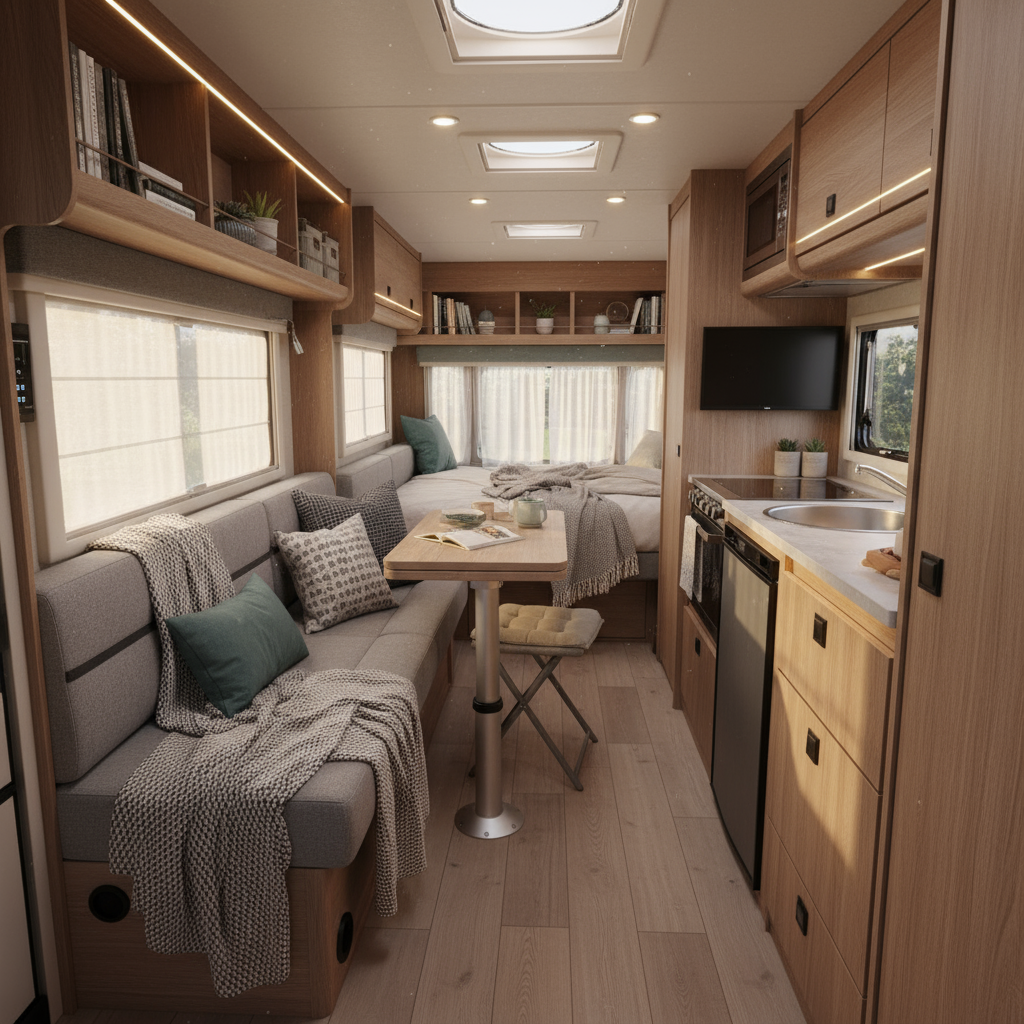
This image showcases an efficient use of space within the RV. It features modern amenities. There is plenty of natural light, creating a welcoming and functional living area.
- Image 1: A cozy, well-organized interior of an RV showcasing efficient use of space.
- Image 2 (Below): A modern tiny house surrounded by nature, emphasizing sustainability and simplicity.
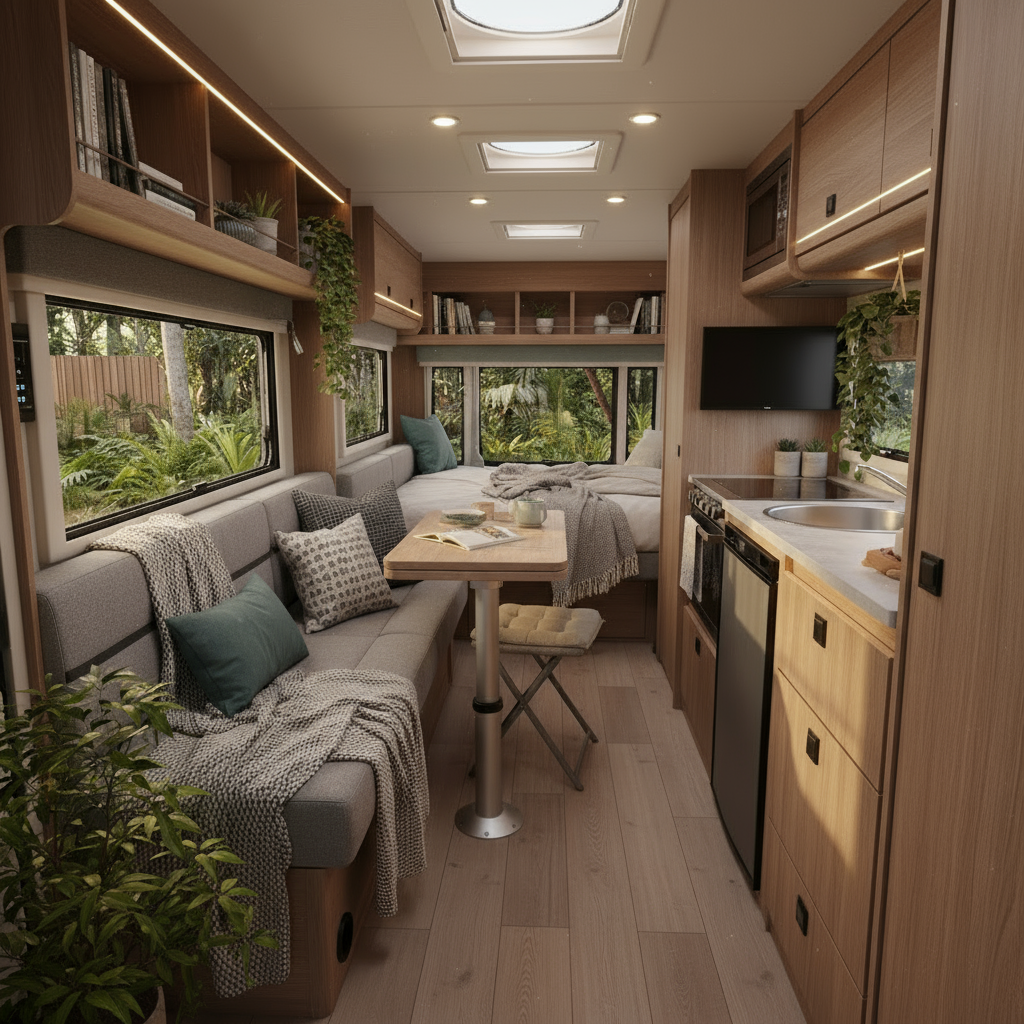
With these visuals, we’ve illustrated two appealing and practical options for small home living. You might be drawn to the mobility of an RV. Alternatively, the rooted charm of a tiny house might appeal to you. Each lifestyle offers unique benefits and challenges. They cater to different preferences and needs.
For more reading, go to the this resource: https://asmalllife.com/2016/07/26/10-best-books-tiny-living/