
Title: How to Become a Featured Creator: A Step‑by‑Step Guide to Standing Out, Growing Your Audience, and Landing Brand Partnerships

—
Introduction – Why “Featured Creator” Is the New Gold Standard
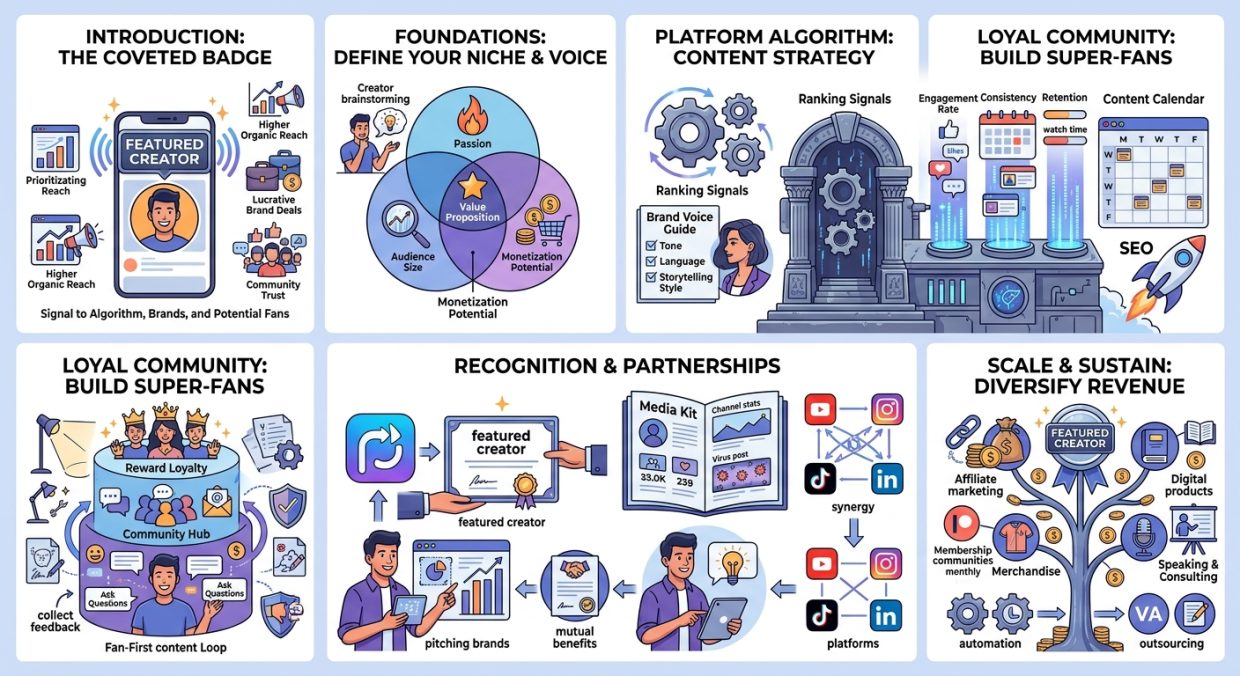
Imagine scrolling through your favorite platform and seeing a bold badge next to a creator’s name that reads “Featured Creator.” That badge isn’t just a decorative label—it’s a signal to the algorithm, to brands, and to millions of potential fans that this creator consistently delivers high‑quality, engaging content. In today’s crowded creator economy, being a featured creator can mean:
- Higher organic reach – platforms often prioritize featured creators in feeds, explore pages, and recommendation engines.
- Lucrative brand deals – brands actively hunt for creators with the “featured” tag because it guarantees credibility and a proven audience.
- Community trust – followers view featured creators as thought‑leaders, increasing loyalty and engagement rates.
- Tone: Conversational, witty, educational, or inspirational?
- Language: Do you use industry jargon, slang, or simple everyday words?
- Storytelling Style: Do you rely on personal anecdotes, data‑driven narratives, or visual metaphors?
- Keyword Research: Use tools like AnswerThePublic, Ubersuggest, or the platform’s own search bar to find long‑tail queries.
- Title & Caption Optimization: Place the primary keyword within the first 40 characters of titles or captions.
- Hashtag Strategy: Combine 3‑5 high‑volume hashtags with 5‑7 niche‑specific tags. Avoid “spammy” tags that don’t relate to the content.
- Alt Text & Transcripts: Add descriptive alt text to images and transcripts to videos—this boosts accessibility and SEO.
- Reply Promptly: Aim to respond to comments within the first hour of posting.
- Ask Open‑Ended Questions: “What’s the biggest challenge you face when trying to upcycle your wardrobe?” invites longer conversations.
- Show Behind‑the‑Scenes: Share your creative process, failures, and wins—people love the human side.
- Lead Magnet: Offer a free downloadable checklist (e.g., “30‑Day Sustainable Closet Challenge”) in exchange for email sign‑ups.
- Weekly Newsletter: Summarize top posts, share exclusive tips, and tease upcoming content.
- Live Sessions: Host monthly Q&A or workshop sessions to deepen relationships.
- Acknowledge the Issue: “I see your concern, and I’m looking into it.”
- Provide Context (Without Excuses): Explain your perspective briefly.
- Offer a Solution or Next Step: “I’ll be updating the video description with accurate sources tomorrow.”
- Channel Overview: Followers, average engagement rates, audience demographics.
- Top Performers: Screenshots or links to 3–5 viral pieces, with metrics.
- Collaboration Options: Sponsored posts, product reviews, affiliate links, giveaways, co‑created series.
- Pricing Structure: Transparent rates (or a “starting at $X” note) to speed up negotiations.
- Contact Info: Email, phone, and a link to a Calendly or scheduling tool.
- Teaser Clips: Post a 15‑second teaser on TikTok that directs viewers to the full YouTube video.
- Re‑share User‑Generated Content: If a brand shares your Instagram Reel, repost it on your LinkedIn with a professional commentary.
- Unified Hashtag: Use a consistent, brand‑specific hashtag across all platforms to consolidate discoverability.
- Content Scheduling Tools: Later, Buffer, or Hootsuite for automated posting.
- Outsourcing: Hire a virtual assistant for comment moderation, a freelance editor for video cuts, or a graphic designer for thumbnails.
- Workflow Automation: Use Zapier or Make (formerly Integromat) to sync new email sign‑ups to your CRM, or to push You
If you’ve ever wondered how to earn that coveted badge, you’re not alone. The good news? Becoming a featured creator isn’t a mysterious secret reserved for a select few; it’s a systematic process that blends strategy, consistency, and authentic storytelling. In this 2,000‑word guide, we’ll walk you through every step—from laying the groundwork to mastering platform algorithms—so you can turn your passion into a recognized, revenue‑generating brand.
—
1. Lay the Foundations: Define Your Niche, Voice, and Value Proposition
1.1. Choose a Niche That Aligns With Your Passion and Market Demand
A strong niche is the compass that guides every piece of content you create. It should satisfy three criteria:
| Criterion | Why It Matters | How to Test It |
|———–|—————-|—————-|
| Passion | Keeps you motivated during slow growth phases. | List topics you could talk about for hours without getting bored. |
| Audience Size | Guarantees a reachable market for growth and brand collaborations. | Use tools like Google Trends, Ahrefs, or platform search insights to gauge search volume. |
| Monetization Potential | Determines the viability of brand deals, product launches, or services. | Research existing sponsorships, affiliate programs, and high‑ticket offers within the niche. |
Example: A creator who loves sustainable fashion, notices a surge in “eco‑friendly wardrobe” searches, and sees brands like Patagonia offering influencer programs has hit the sweet spot.
1.2. Craft a Distinctive Brand Voice
Your voice is the personality that makes your content instantly recognizable. Ask yourself:
Write a Brand Voice Guide (200–300 words) that outlines these elements and share it with anyone who helps you create content—editors, graphic designers, or video editors. Consistency in voice is a key factor platforms consider when selecting featured creators.
1.3. Articulate Your Value Proposition in One Sentence
What unique benefit do you deliver? A crisp value proposition helps you pitch yourself to platforms and brands alike.
> “I help busy professionals master minimalist home organization in under 10 minutes a day, using science‑backed habits.”
Keep this sentence handy for bios, outreach emails, and pitch decks. It becomes the “elevator pitch” that convinces platforms you’re worth featuring.
—
2. Master the Platform Algorithm: Content Strategy That Gets Noticed
2.1. Understand the Core Ranking Signals
Every major platform—YouTube, Instagram, TikTok, LinkedIn, and emerging hubs like Substack—relies on a set of ranking signals. While exact formulas are proprietary, the consensus among creator experts highlights three universal pillars:
| Signal | What It Means | How to Optimize |
|——–|—————|—————–|
| Engagement Rate (likes, comments, shares, watch time) | Shows audience relevance. | Prompt viewers to comment, use call‑to‑actions (CTAs), and create “loopable” content that encourages re‑watch. |
| Consistency (posting frequency & schedule) | Signals reliability to the algorithm. | Use a content calendar; aim for at least 3–5 pieces per week on fast‑moving platforms, 1–2 per week on long‑form platforms. |
| Retention (how long viewers stay) | Directly ties to watch time and dwell time. | Hook the first 3 seconds, deliver value early, and end with a cliff‑hanger or teaser for the next piece. |
2.2. Build a Content Pillar System
A content pillar is a core topic that supports multiple sub‑topics, allowing you to repurpose and expand ideas efficiently.
Step‑by‑Step Pillar Creation:
1. Identify 3–5 Pillars aligned with your niche (e.g., “Sustainable Wardrobe Basics,” “DIY Upcycling Tutorials,” “Eco‑Friendly Shopping Guides”).
2. Map Sub‑Topics under each pillar (e.g., for “DIY Upcycling,” you could create videos on “Turning Old T‑shirts into Tote Bags,” “Repurposing Denim Jeans,” etc.).
3. Plan Formats – Mix short‑form reels, carousel posts, long‑form videos, and blog articles to satisfy algorithmic preferences for varied content.
4. Create a Repurposing Matrix – Turn a 10‑minute YouTube tutorial into a 60‑second TikTok, an Instagram carousel, a LinkedIn article, and a newsletter snippet.
The pillar system ensures you never run out of ideas while feeding the algorithm with fresh, relevant content.
2.3. Leverage SEO for Social Search
Even on platforms like TikTok and Instagram, search engine optimization (SEO) matters. Optimize for both platform search and Google:
2.4. Harness Data Analytics to Iterate
Every platform offers analytics dashboards. Treat them as a feedback loop:
1. Weekly Review: Identify top‑performing posts (by engagement and retention).
2. Pattern Recognition: Note common elements—time of day, format, hook style, or CTA.
3. Test & Refine: Implement A/B tests on thumbnails, captions, or posting times.
4. Document Findings: Keep a simple spreadsheet tracking hypothesis, test, result, and next steps.
Data‑driven iteration is a hallmark of featured creators; it shows platforms that you understand and adapt to their ecosystem.
—
3. Build a Loyal Community: From Followers to Super‑Fans
3.1. Engage Authentically, Not Just Reactively
3.2. Create a “Community Hub” Outside the Main Platform
Having an email list or a Discord/Telegram group gives you direct access to your audience, free from algorithmic constraints.
3.3. Implement a “Fan‑First” Content Loop
1. Collect Feedback: Use polls, story stickers, or Google Forms to ask what topics your audience wants.
2. Co‑Create: Invite top fans to contribute ideas, vote on thumbnails, or even appear in videos.
3. Reward Loyalty: Spotlight fan‑generated content, run giveaways, or offer early access to products.
When platforms detect high community interaction (comments, shares, DMs), they interpret it as a sign of creator influence—boosting your chances of being featured.
3.4. Manage Reputation & Crisis Communication
Even the most polished creators face criticism. A quick, transparent response can turn a potential PR disaster into an opportunity to showcase authenticity.
Consistent reputation management reinforces trust, a core metric for featured creator programs.
—
4. Position Yourself for Platform Recognition & Brand Partnerships
4.1. Apply to Official “Featured Creator” Programs
Many platforms run formal programs (e.g., YouTube Shorts Fund, Instagram Creator Marketplace, TikTok Creator Next). Steps to increase acceptance:
1. Meet Baseline Requirements: Minimum follower count, consistent posting schedule, and community guidelines compliance.
2. Optimize Your Profile: Use a professional photo, clear bio with keywords, and a link tree to all your channels.
3. Showcase High‑Performing Content: Highlight 3–5 pieces that demonstrate engagement, originality, and alignment with platform values.
4. Submit a Polished Application: Include your value proposition, audience demographics, and a brief case study of a successful campaign or viral post.
4.2. Build a Brand‑Ready Media Kit
A media kit is your “resume” for brands. Include:
Keep the design clean, on‑brand, and downloadable as a PDF.
4.3. Pitch Brands with a Data‑Backed Approach
When reaching out:
1. Personalize: Reference a recent brand campaign you admired and explain why you’re a natural fit.
2. Highlight Mutual Benefits: Show how your audience aligns with the brand’s target market.
3. Present a Mini‑Campaign Idea: Offer a concrete concept (e.g., “A 5‑part Instagram Reel series showing how to style one eco‑friendly piece in three seasons”).
4. Include Metrics: “My last sustainability post reached 150K views with a 12% save rate—perfect for driving product consideration.”
Brands love creators who come prepared with a clear plan and measurable goals.
4.4. Leverage Cross‑Platform Synergy
Being featured on one platform can boost visibility on others. Strategies:
Cross‑platform traffic signals to algorithms that you’re an influential hub—another factor that platforms weigh for featured creator status.
—
5. Scale, Monetize, and Sustain Your Featured Creator Status
5.1. Diversify Revenue Streams
Relying solely on brand deals can be risky. Complement with:
| Revenue Stream | How to Implement |
|—————-|——————|
| Affiliate Marketing | Join programs like Amazon Associates, ShareASale, or niche‑specific eco‑product networks; embed tracked links in captions and newsletters. |
| Digital Products | Sell e‑books, templates, or courses (e.g., “30‑Day Sustainable Wardrobe Challenge”). |
| Membership Communities | Use platforms like Patreon or Ko‑fi to offer exclusive content, behind‑the‑scenes, or monthly live workshops. |
| Merchandise | Design eco‑friendly apparel or accessories that reflect your brand identity. |
| Speaking & Consulting | Offer webinars or consulting for brands looking to adopt sustainable marketing strategies. |
5.2. Automate & Outsource for Efficiency
As you grow, time becomes a scarce resource. Consider: