AI Voice Cloning vs Traditional Voice Acting: Which Should You Use?
Clone a voice when you need the same narrator across dozens of episodes and you own that voice. Hire an actor when the performance has to carry a scene. The cost gap is real; the legal gap is bigger.
Most comparisons of these two options argue about warmth and soul. That argument is settled and unhelpful. What decides it is duller: what legal object you are making when you press generate, and whether the scene needs a performance or just a voice.
Key takeaways
- Most platforms will not clone another person’s voice for you, even with written permission. The owner verifies it and shares it.
- A synthetic voice that resembles no real person is not a digital replica, which removes most of the legal exposure.
- Cloning needs 30 minutes to three hours of clean recorded audio before it produces a usable line.
- Cloned narration costs cents a minute; an actor costs a per-project fee with usage terms attached.
The choice is about which legal object you are making
There are three things people call an AI voice, and only one of them is legally quiet.
A clone of a specific, identifiable person is a digital replica. SAG-AFTRA’s digital replica guidance defines it as a replica of a performer’s voice or likeness created using digital technology, and its contracts treat it as something requiring informed consent and payment. Tennessee goes further, defining voice as a sound “readily identifiable and attributable to a particular individual, regardless of whether the sound contains the actual voice or a simulation of the voice of the individual.” Note the word simulation: a voice that is not the person but is recognizable as them is covered.
A wholly synthetic voice that resembles nobody is a different object. The same guidance draws the line, defining a synthetic performer as a wholly digital reproduction that appears to be a person, does not resemble a recognizable performer, and is not voiced by a person. That is not a replica, and it is not what the statutes are aimed at. The third thing is a human performance, which comes with a contract.
So the first question is not which one sounds better. It is whether the voice on your soundtrack is traceable to a real person. If it is, you have paperwork to do. If it is not, you are mostly free.
What a clone needs before it says one word
The setup is the part nobody budgets for. On ElevenLabs, the platform most indie animators land on, there are two products. Instant cloning works from under two minutes of audio and ships on the $6 Starter plan with a commercial license, which gets you a serviceable character voice quickly. Professional cloning trains a dedicated model, wants at least 30 minutes of audio, and performs best near two to three hours.
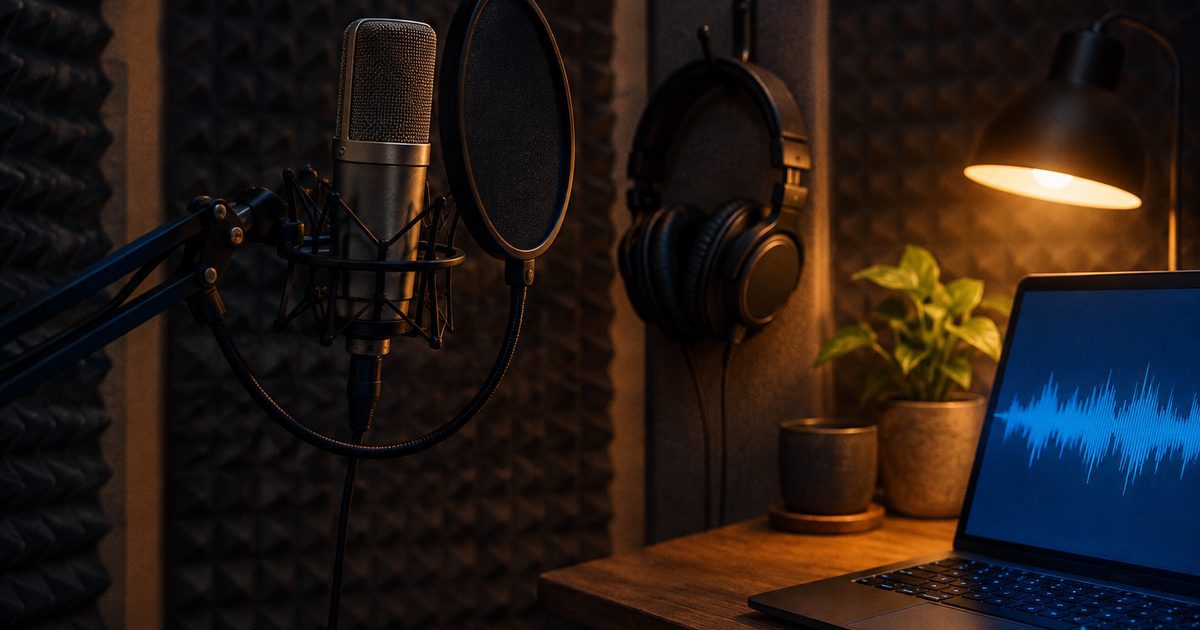
Three constraints follow. You can only clone your own voice: the company states that “even with their consent, you cannot clone someone else’s voice,” so a collaborator verifies their voice on their own account and sends you a sharing link. The model copies what it hears, including room reverb and every um, so the training audio has to be a real session in a treated space rather than a phone memo — the parts that matter are in our recording setup guide. And professional clones do not sing.
AI voice cloning vs voice acting, side by side
| What you are comparing | Cloned voice | Voice actor |
|---|---|---|
| Cost model | Subscription plus credits, cents per minute | Per-project fee with usage terms |
| Setup time | 30 minutes to three hours of audio, then a fine-tune | Booking, brief, session |
| Pickups and rewrites | Retype the line | Re-book the actor |
| Consistency over 40 episodes | Identical every time, by design | Human variation, which is either the point or a problem |
| Emotional range | Narrow; you direct with text and settings | Wide, and reacts to the scene |
| Comedy timing | Weak without heavy editing | The reason to hire a person |
| Legal exposure | None if the voice resembles no real person; significant if it does | Clear once the contract is signed |
| Residuals and reuse | None | Defined by the agreement |
What each one costs
The AI side is public and easy to check. Current pricing runs Free at $0 with 10,000 credits a month, Starter at $6 with 30,000, Creator at $22 with 121,000, Pro at $99 with 600,000 and Scale at $299 with 1,800,000. Text to speech consumes one credit per character on the standard models, and the extra-minute rate falls from about $0.36 on Free to roughly $0.17 to $0.18 on paid tiers.
Run it on a real episode. A 45-minute narration at normal speaking pace is roughly 40,000 to 45,000 characters, so it fits inside one month of Creator with room left, and the overage rate puts a fully narrated 45-minute episode near eight dollars. That is the economic argument, and it is strong.
The actor side is not a number I can quote honestly, because independent rates vary by market, usage and experience, and the rate guides that publish ranges are gated for a reason. What is stable is the structure: a per-project fee, a defined term and territory, and under union contracts pension and health contributions plus residuals. The comparison people forget is that the clone is not free at the start either. Two hours of usable training audio is a studio day, and you will redo it when the microphone changes.
Where a clone wins
Serialized work with a fixed narrator: if a show runs 40 episodes and the narrator’s voice is part of the format, a clone removes a scheduling dependency and makes reshoots trivial. Pickups: when a client changes one line approved three weeks ago, retyping beats re-booking. Temp tracks, the most underused of the four — cut the whole animatic before spending a dollar on performance, so the actor walks in with timing locked. And languages you cannot cast, with the caveat that a clone reading Spanish in an English accent reads as a mistake on a travel channel, not on an internal explainer.
Where an actor wins
Anything where the performance is the product. Comedy depends on timing that lives in the pause between words, which is exactly what text-to-speech flattens; if the joke does not land, no setting fixes it. Scenes with another performance in them, because actors react and clones read. Characters that have to change, since a lead who starts guarded and ends open needs a performer making a decision in episode nine that was not in the script. There is a commercial argument too: “voiced by” is a name for the media kit, and “generated” is not.
The consent rules that actually bind you
This is a general guide, not advice on your situation, and the specifics are local.
Under a union contract, the terms are already strict. SAG-AFTRA requires informed consent with a “reasonably specific description of the intended use,” given clearly and conspicuously and separately signed or initialed. Consent applies only to specific projects, with no blanket consent for future work; producers give at least 48 hours’ notice before a scan; and the performer is paid, with pension and health contributions and residuals where the replica stays in the work.
In some states, statute backs it up. California’s AB 2602, in force for new performances fixed from January 1, 2025, makes a contract clause unenforceable if it lets a company use a digital replica in place of the individual’s work, lacks a reasonably specific description of intended uses, and the individual was not represented by counsel or a union agreement covering replicas. Tennessee’s ELVIS Act, effective July 1, 2024, creates liability for publishing a voice you know was not authorized and reaches tools whose primary purpose is producing a particular person’s voice. It carves out news, commentary, scholarship, satire, parody, and a person portrayed as themselves in an audiovisual work, unless the result creates a false impression of authenticity.
Federal rules are the contested part. The FTC’s Impersonation Rule, in effect since April 1, 2024, covers government and business impersonation rather than private individuals generally; the agency proposed an amendment on individual impersonation in December 2024 and in September 2026 sought comment on updating the rule. The NO FAKES Act has been reintroduced repeatedly and has not passed. Plan for state law, not a federal floor.
Unresolved: whether a voice model trained on a performer’s recordings is itself a copy. That is in litigation and changes nothing about what you should document today.
A workflow that uses both
The setup that holds up for a small studio is a sequence, not a choice. Hire an actor for the pilot and the character bible, and record more than you need — alternate takes, the same lines read flat and read warm. With a written release naming the show and the distribution rights, that session gives you the performance reference and a licensed library to clone from if the actor agrees. Build narration and pickups from a clone of your own voice, which needs nobody’s permission but yours, then disclose. Every episode we ship says which parts are generated, and our own AI workflow has been documented that way from the start. Directing a clone is a writing problem, which is why a repeatable prompt structure matters more than any slider.
AI voice cloning vs voice acting FAQs
Can I clone a voice actor’s voice with their permission?
Not directly on most platforms. ElevenLabs states you can only create a professional clone of your own voice, even with consent; the actor verifies it on their own account and shares it by link. Get the permission in writing regardless — the platform check is not a license.
Is AI voice cloning cheaper than hiring a voice actor?
Per finished minute, yes, by a wide margin: a fully narrated 45-minute episode can sit around eight dollars in credits. In total cost, only if you ignore the recording, since two hours of clean training audio is a session you do first.
Is a synthetic voice a digital replica under the law?
Usually not, if it resembles no identifiable person. SAG-AFTRA separates a synthetic performer from a digital replica on exactly that basis, and state statutes target voices readily identifiable as a particular individual.
Can AI voice cloning replace voice actors entirely?
For narration, documentation and pickups, largely yes, and it is already happening. For comedy, emotional scenes and anything where two performances react to each other, no — the failure is audible in the first ten seconds.
Start with the voice you can document
Decide what the voice is before you decide what it costs. A voice that belongs to nobody is cheap and quiet. A voice that belongs to somebody is a contract, and it is worth having one.
Some links in this guide may be affiliate links. We keep them separate from sponsored content, and you can read how and why in our post on separating affiliate content from paid sponsorships. This is not legal advice — always confirm current rules with the relevant authority before you act on it.