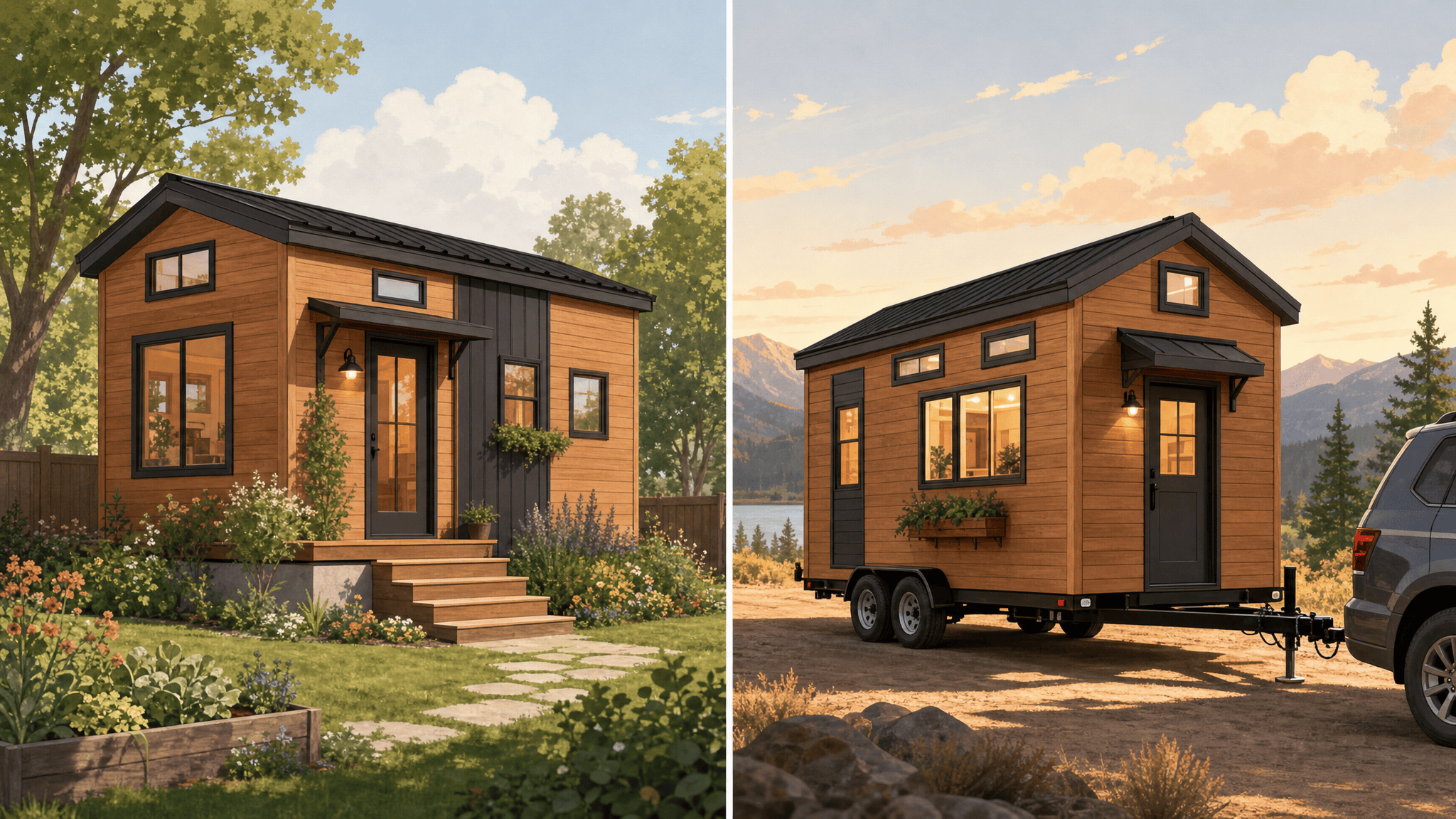
From Debt to Freedom: Real Stories of Downsizing Into a Tiny Home or RV
Tiny Home vs. Traditional Home
There’s a version of the tiny home story that gets told the most: reclaimed wood, mason jar lighting, a picture-perfect Instagram feed. But beneath much of the tiny home and RV movement is a more practical story — one about using radical downsizing as a tool to escape debt, rebuild financial stability, and regain control after life knocks you off course.
Thank you for reading this post, don't forget to subscribe!The Pattern Behind the Decision to Downsize
Talk to enough people who’ve made this leap and a clear pattern emerges. Downsizing into a tiny home rarely starts as a lifestyle choice made from comfort. More often, it follows a disruption:
- Job loss
- Divorce or a breakup
- A health scare
- The slow-building weight of a mortgage that no longer matches income
One increasingly common story: someone becomes suddenly single and unemployed after a long relationship ends, now facing a full mortgage or rent payment alone. Instead of scrambling to maintain the old lifestyle at any cost, they make a deliberate choice to shrink their footprint — sometimes into a home as small as 100 square feet — and rebuild from a foundation of near-zero fixed costs.
Tiny Home vs. Traditional Home: What the Numbers Actually Look Like
The financial logic behind downsizing to escape debt is straightforward once it’s laid out side by side.
A conventional home typically includes:
- A mortgage or rent payment
- Property taxes
- Utilities scaled to square footage
- Homeowners insurance
- Maintenance costs for a full-size structure
A tiny home or RV, especially one set up for off-grid or minimal-hookup living, can reduce or eliminate most of these line items at once:
- Solar power cuts or eliminates the electric bill
- A smaller footprint means less to heat and cool
- Secondhand materials and incremental building avoid interest payments entirely
- Paying cash for land — even a modest rural parcel — removes a mortgage from the equation
People who’ve walked this path often describe a specific, almost startling realization: it’s possible to reach a point where monthly fixed costs are close to zero, meaning even part-time or freelance income covers everything. That’s a fundamentally different financial position than being one missed paycheck away from crisis — which is where a lot of these stories start.
It’s Not Just About the Money: The Emotional Side of Tiny Living
What’s striking in these stories is how often the emotional shift is described as being just as important as the financial one. Downsizing dramatically, especially after a hard life event, tends to create a forced simplicity that many people describe as unexpectedly peaceful rather than depriving.
- Fewer possessions mean fewer decisions
- A smaller space means less to clean, maintain, and worry about
- Learning new skills out of necessity — solar system maintenance, wood-stove tending, water management — often becomes a source of pride and self-sufficiency rather than a burden
The Trade-Offs of Tiny Home and RV Living (Nobody Skips These)
To be fair to the honest voices in this space, none of them pretend downsizing is easy. The common trade-offs include:
- Less space for guests
- Giving up conveniences most people take for granted, like reliable on-demand hot water, which often requires real planning in a tiny or off-grid setup
- A longer runway before the home feels fully “done,” since many builds happen incrementally as cash allows, rather than all at once through a loan
- A social adjustment — explaining the decision to friends and family, especially in the aftermath of a job loss or breakup when people are already asking questions
How to Start Downsizing Into a Tiny Home After a Financial Setback
If you’re facing your own version of this crossroads — a job loss, a breakup, or simply a mortgage that no longer makes sense — the throughline in these stories isn’t “sell everything and buy a trailer tomorrow.” It’s a slower, more deliberate build toward a lower cost of living:
- Get the shelter sorted first, however modest
- Add solar power
- Improve water systems
- Build out comfort incrementally as finances stabilize
The goal isn’t perfection on day one. It’s removing the financial pressure driving the stress, one fixed cost at a time, until you’re building toward the future from a place of stability rather than survival.
FAQ: Downsizing Into a Tiny Home or RV
How much money can you save by downsizing into a tiny home?
Many people who downsize report reaching near-zero monthly fixed costs by eliminating a mortgage, cutting utilities through solar power, and avoiding interest payments through cash-only, incremental building.
Is tiny home living difficult after a divorce or job loss?
It comes with real trade-offs — less space, fewer conveniences, and a longer timeline to feel “done” — but many people describe the forced simplicity as emotionally stabilizing rather than difficult.
What’s the first step to downsizing into a tiny home?
Start with basic shelter, then add systems incrementally: solar power first, then water management, then comfort upgrades, as your finances allow.
Suggested internal links: link to related posts on off-grid solar setup costs, RV living budgets, or debt-recovery guides.
Suggested image alt text: “tiny home exterior with solar panels,” “100 square foot tiny house interior,” “off-grid RV setup.”
![[Artistly Design] ml9f2da7 258a 7292 bd26 2da22993d565](https://podcastsitytv.com/wp-content/uploads/2026/07/Artistly-Design-ml9f2da7-258a-7292-bd26-2da22993d565-150x150.jpg)