Cold-Climate Homesteading: Lessons From Living Off-Grid in the Far North
Off-Grid in the Far North and North America
Thank you for reading this post, don't forget to subscribe!
Off-grid living is hard enough in mild climates. Add genuinely cold winters — the kind found in Canada’s Northwest Territories or similarly harsh northern regions — in North America. Every single system on your homestead needs a rethink. The homesteaders who’ve made cold-climate homesteading work have learned a specific set of lessons the hard way, and they’re worth understanding before you commit to a cold-climate off-grid life of your own.
Power Becomes a Seasonal Puzzle
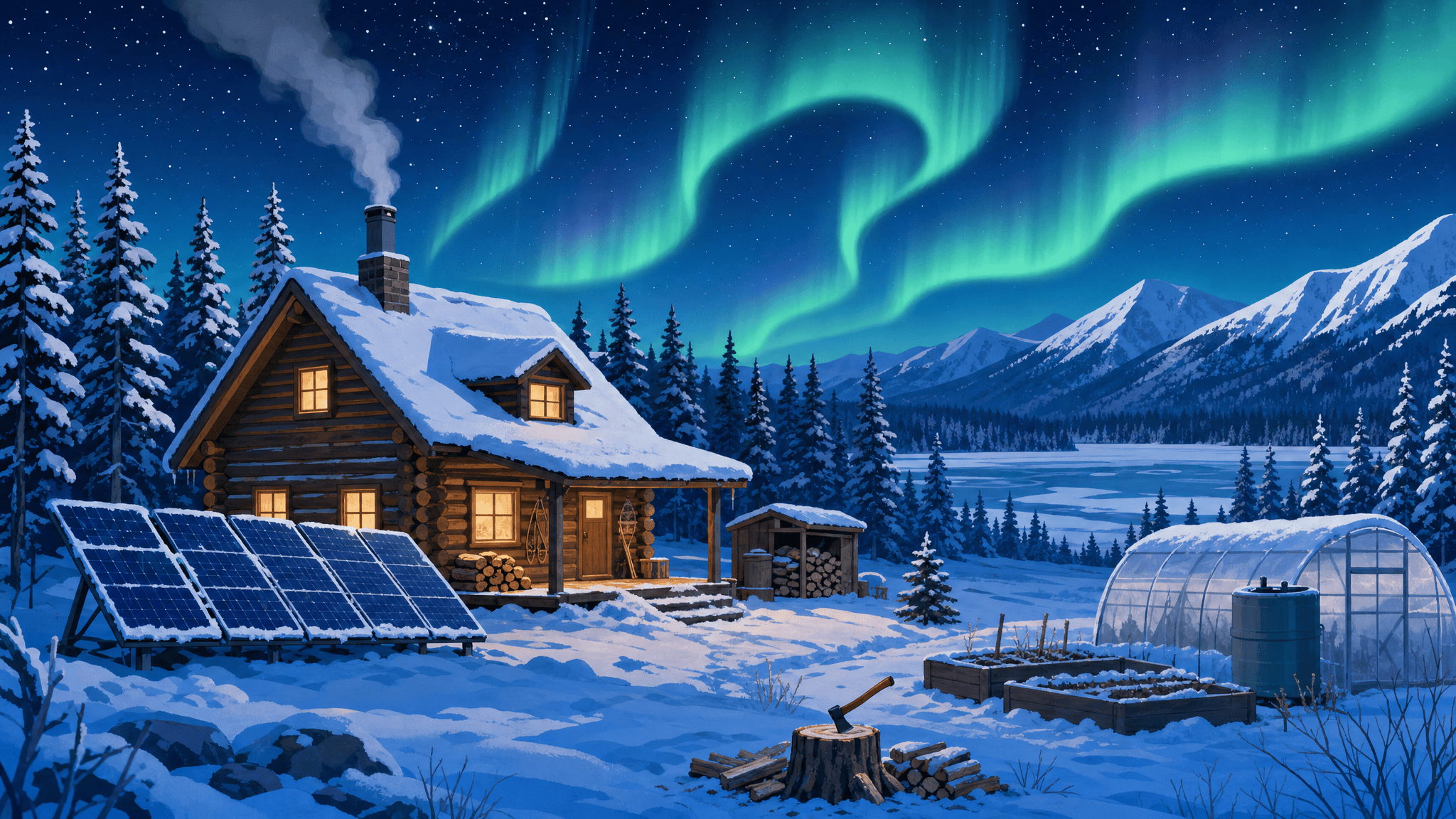
Solar power, the backbone of most off-grid setups, faces its toughest test in far-northern winters, where daylight hours shrink dramatically, and snow cover can further reduce panel output. In this kind of cold-climate homesteading, homesteaders learn quickly that their summer solar capacity — which might comfortably cover all their needs from spring through fall — simply isn’t enough to rely on through the darkest months. The practical solution most arrive at is a hybrid approach: oversizing the solar array beyond what summer alone would require, pairing it with a generator as a genuine winter backup rather than an emergency-only option, and being deliberate about reducing electrical demand during the darkest stretches, saving power-hungry tasks for the brighter days.
Water Systems Need Serious Winterization
Anything involving water in a far-northern climate has to be engineered around one unforgiving fact: freezing. Exposed pipes, tanks, or pumps will freeze solid and potentially burst if they’re not properly insulated, buried below the frost line, or heat-traced. Many cold-climate homesteaders end up building a dedicated insulated enclosure just for their water systems, sometimes with a small supplemental heat source, purely to keep everything functional through the coldest months. Gravity-fed systems still work in cold climates, but the delivery lines need the same freeze protection as any other plumbing.
Supply Runs Become a Logistics Exercise
In remote northern locations, getting supplies to your homestead isn’t a quick errand — it can mean long drives on seasonal roads, or in the most remote cases, planning around ice roads or barge schedules that only operate certain times of year. The lesson from experienced cold-climate homesteaders is to think in terms of seasons, not weeks: what do you need for the entire winter before the roads become unreliable or impassable? This requires a level of inventory planning that’s simply unnecessary in more accessible climates, and it often benefits enormously from coordinating with neighbors to combine supply runs and split costs and effort.
Time Management Looks Completely Different
In a place with drastically shifting daylight hours, the practical rhythm of homestead life changes with the seasons in a way that catches newcomers off guard. Summer’s long daylight hours become a period of intense, almost nonstop productivity — building, repairing, growing, and stockpiling for the months ahead. Winter’s short days shift the rhythm toward indoor tasks, planning, and rest, with outdoor work compressed into the limited daylight window. Homesteaders who thrive in these conditions learn to lean into this rhythm rather than fight it, treating summer as the working season and winter as the season for maintenance and recovery.
The Support Network Matters More Than You’d Think
Isolation is often assumed to be the whole point of off-grid living, but far-northern homesteaders consistently emphasize the opposite lesson: a support network, even a small and geographically spread one, is essential rather than optional in extreme climates. Neighbors who can help during equipment failures, online communities where region-specific advice is shared, and simply having someone to check in with during a genuinely dangerous cold snap all make a measurable difference in both safety and quality of life.
Should You Attempt Cold-Climate Off-Grid Living?
If you’re drawn to remote, far-northern homesteading, the honest advice from those who’ve done it is to treat your first winter as a test, not a commitment. Oversize every system beyond what feels necessary, build in redundancy for anything safety-critical (heat and water especially), and lean on the accumulated knowledge of people who’ve already solved these exact problems rather than trying to reinvent cold-weather off-grid living from scratch. It’s genuinely one of the more demanding versions of this lifestyle — but for those it fits, it’s also described as one of the most rewarding.